
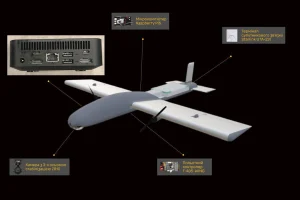
To control the drone, as well as to process photos and videos, the Russian occupation forces equipped the device with two computers at once. The first is a miniature single-board Raspberry Pi 5, and the second is a full-fledged mini-PC. This is a Chinese Mini PC F8, labeled by the Russian brand Raskat (NEW IT PROJECT LLC), which is housed in its own external case. The device is equipped with a licensed version of the Windows 11 operating system. This equipment of the Russian reconnaissance UAV was reported by the Defence Intelligence of Ukraine.
Optics play a key role in aerial reconnaissance, so the Russian military equipped the drone with a Chinese SIYI ZR10 camera with a 10x optical zoom and a three-axis stabilization system. In addition to conducting surveillance, the UAV can also be used to adjust strikes. At the same time, the main highlight of this configuration is the Starlink satellite communications antenna. Observers are increasingly noticing the use of the SpaceX service on Russian drones, not only reconnaissance but also strike drones. Radio communications and drone specialist Sergey “Flash” Beskrestnov recently noted on Telegram that cases of Starlink terminals being installed on Molniya drones are becoming more frequent and show signs of industrial rather than artisanal installation.
The Molniya-2R aircraft-type FPV drone is launched from a catapult and is equipped with two engines mounted on the wings. Earlier, the DIU reported the presence of attack drones of the same type, in which the target is selected by the operator directly during the broadcast from the onboard camera. Such UAVs are optimized for extended flight time and are equipped with an “enhanced warhead”.
The identified components demonstrate Russia’s systematic use of Western and commercial technologies in military drones, despite sanctions restrictions. The use of licensed software, civilian mini-PCs, and Starlink satellite communications underscores Russia’s ability to adapt available technologies for warfare and at the same time demonstrates the vulnerability of global supply chains to military misuse.
